Fly fishing blog
Trout Fishery and tackle reviews, recipes, Fly fishing tips, advice and tricks, what flies to use when and where and how some of my customers got on with their fly fishing lessons / tuition for beginners.

Fly Fishing Lessons for Beginners: A Comprehensive Guide

Fly fishing is a captivating outdoor activity that combines the thrill of angling with the beauty of nature. Whether you're an aspiring angler seeking a new hobby or an adventure enthusiast eager to immerse yourself in serene landscapes, learning fly fishing basics can open up a world of excitement. In this guide, we'll take you through the essential aspects of fly fishing for beginners, covering everything from gear to techniques. Let's dive in!
Fly Fishing Basics and Gear / tackle Selection
Before you embark on your fly fishing journey, it's crucial to understand the foundational concepts and fly fishing tackle you'll need.
1. Fly Rod and Reel: The fly rod and reel are the heart of your setup. They come in a wide range of prices, from affordable options to high-end ones. Your choice should match your skill level and budget. The fly rod is typically paired with a corresponding reel to create a balanced setup.
2. Fly Line: Fly lines are unique and vary based on the fishing type and rod weight. They not only carry the fly to the target but also provide the necessary weight for casting. It's essential to choose the appropriate line size that complements your rod.
3. Flies:Flies are artificial imitations of insects or other aquatic creatures that fish feed on. They come in various types, such as dry flies, nymphs, lures and streamers, designed for specific fishing conditions. Consult a fly fishing instructor to choose the right flies for your fishing location and target species.
4. Accessories: Enhance your fly fishing experience with accessories like nets, sunglasses, vests, and waders. These items provide practicality, protection, and comfort while on the water.
Setting Up Your Gear and Learning Basic Techniques
Once you have your fly fishing tackle set up, it's time to learn the basic casting techniques. Here's a simplified step-by-step process:
1. Assemble the Reel: Attach the fly line to the reel following the manufacturer's instructions.
2. Backing, Line, Leader, and Tippet: String the backing, fly line, leader, and tippet in sequence to create a smooth connection from the reel to the fly.
3. Practice Casting: Start with simple casting exercises to get the hang of controlling the fly line. Hold the rod properly, move the line overhead, and practice casting to a target.
Finding the Perfect Fishing Spot and Exploring Techniques
Choosing the right fishing spot is essential for a successful fly fishing experience. Seek advice from local anglers or research online to identify suitable locations. Allocate sufficient time for your fishing trip, and consider bringing a friend to share the experience.
As you explore the world of fly fishing, consider the following techniques:
1. Dry Flies: These imitate insects that float on the water's surface. They're ideal for fishing in calm waters.
2. Nymphs: Nymph flies resemble immature aquatic insects that fish often feed on underwater. They're effective for fishing in various conditions.
3. Streamers: Streamer flies mimic small fish or other prey, making them suitable for targeting larger fish species.
Learning and Growing
Fly fishing is an art that requires practice and dedication. Don't be discouraged by initial challenges—perseverance leads to mastery. Invest time in learning essential knots, accurate casting, and mending techniques. Familiarize yourself with fishing rules and regulations, and obtain any necessary fishing licenses to ensure you're fishing legally.
Furthermore, enrich your fly fishing journey by acquiring knowledge of entomology—the study of insects—since insects play a significant role in the fish's diet. Gently handle caught fish and practice catch-and-release whenever possible to protect fish populations.
Christmas gift vouchers now available !!!!!!!

My fly fishing gift vouchers are now available, ideal for any occasion like Christmas or birthdays.
Well done Suki, an 8lb monster Rainbow on your first lesson!!!!!!!

Suki was in the UK from Germany visiting family and decided she would treat herself to a days fly fishing. She had done some about 20 years ago but not much. We got to grips with the casting which she soon managed to improve and was much more confident.
Exeter University Fishing Society join me at Exe Valley fly fishery
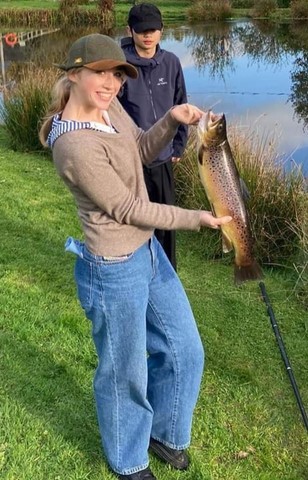


I was contacted by Exeter University fly fishing society about doing some fly fishing instruction for four of their members. We met at Exevalley fly fishery near Dulverton on a sunny and mild November morning, Ben, Felix, Simon and Lucy.
Winter fly fishing tips.
It may be more pleasant to spend a sunny summer day on the banks of a stillwater, but trout avoid warm water, thus winter frequently brings the most exciting fishing. There's no excuse to stay indoors this winter, with so many fisheries remaining open all season long.
When fishing for trout in the winter, you may get away with using most of the gear you used in the summer. However, having a variety of sinking lines on hand is typically helpful. To thoroughly explore the depths of your preferred fishery, bring a variety of stillwater fly lines, including sink-tip, intermediate, and faster sinking alternatives. If the temperature is dropping, this becomes much more crucial. When this happens, the water temperature is most constant at depth in a still body of water, whereas the top and shallows cool off more rapidly, especially if a cold wind blows over them. Because of this, fish may stay below the surface in warmer water rather than in the colder upper layers.
Slow retrieves, especially when used with the figure-eight technique, can greatly improve your odds of catching fish. This method allows you to slowly reposition the fly in the water while maintaining touch for precise bite detection. Static flies fished under an indicator can also be effective now if you so choose. Traditional winter fishing methods on many stillwaters involve letting a small, dark fly, like a buzzer, swing around in the wind.
Jujube Midge, sizes 18-24.
Egg Patterns, sizes 14-16.
Pheasant Tail, sizes 18-22.
Parachute Adams, sizes 20-24.
Tungsten Head Rainbow Warrior, sizes 18-22.
Brooks' Sprout Midge Emerger, sizes 20-24.
WD-40, sizes 20-24
Well done Simon, a cracking 4lb Spartic from Exe Valley Fly fishing, Exebridge

Simon travelled all the way from Birmingham! and we met on a very sunny October morning at Exe valley fly fishing bang on the Somerset / Deveon border. He had done some fly fishing before, so I evaluated his casting and ironed out a few little errors.
Well done Rob with a personal best
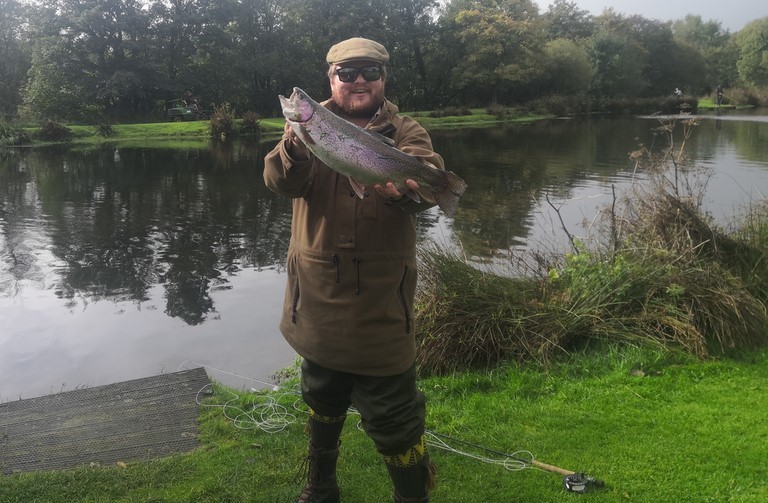
Rob's wife had purchased one of my fly fishing gift vouchers for his birthday, and we duly met at Exebridge fly fishery on a blustery Saturday morning. Rob had already done some fly fishing and to be fair his casting was very good, so I taught him some advanced casting techniques. We started with the reverse cast which he soon got to grips with, and indeed used it throughout the day. We then went on to the double haul and reverse double haul, which again he picked up quickly.
Well done John an amazing day
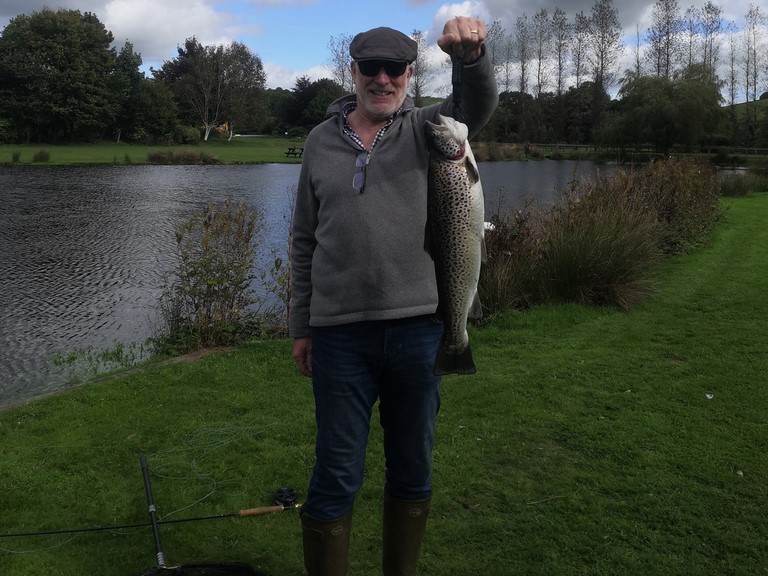

So Johns lovely wife treated him to a days fly fishing lesson. We met on a cloudy October day, after an hour or so fly casing practice we progressed to the water, namely Anchor Lake at Exe valley fly fishery in Exebridge on the Somerset Devon Border.
A trip to Exe Valley fly fishery
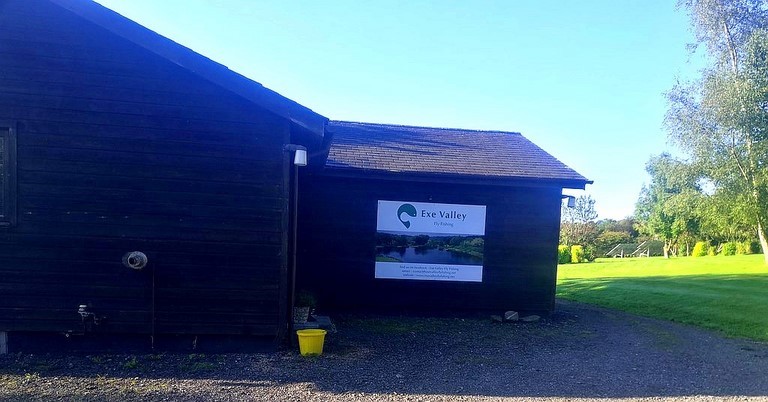
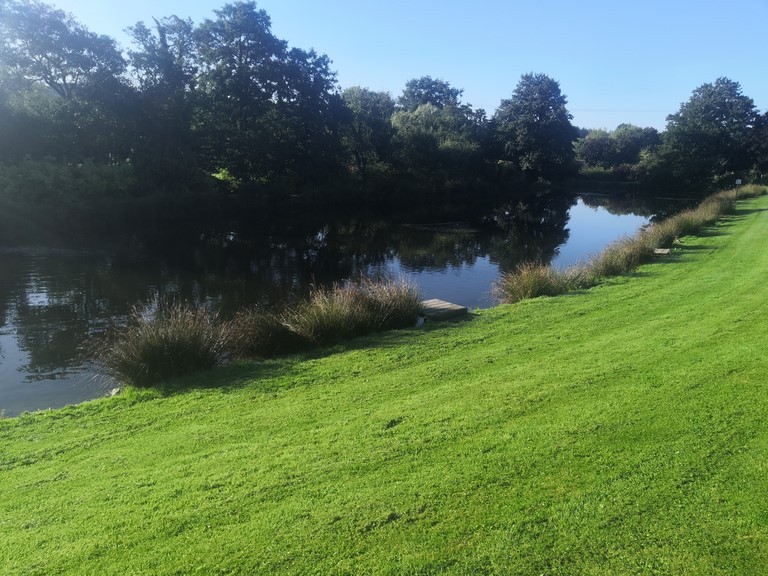
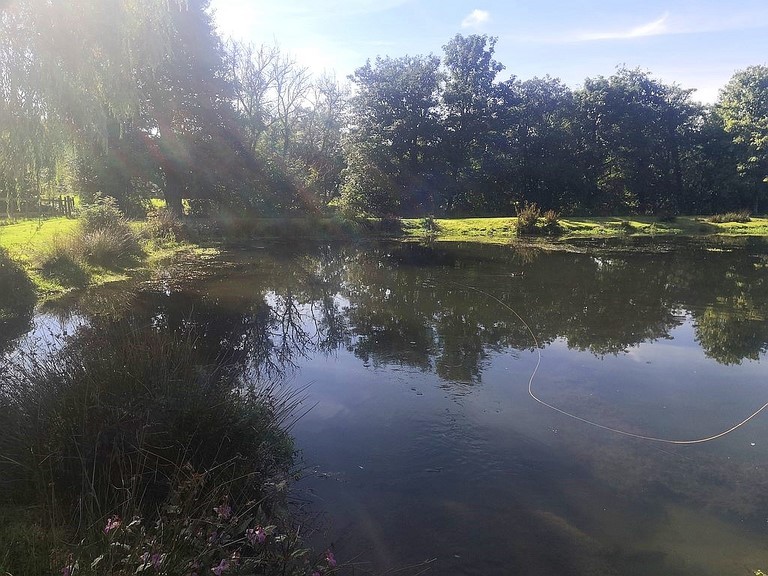
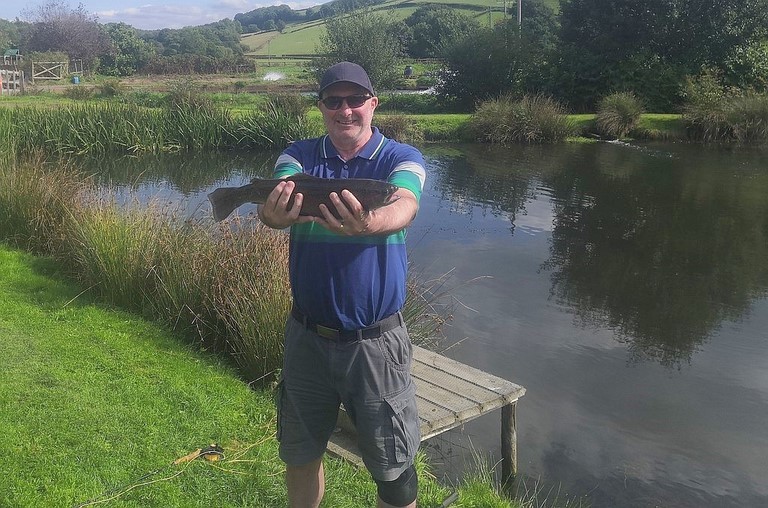


So I decided I would have a change of venue and give Exe Valley near Dulverton a go, and combine it with a fly fishing lesson. I arrived at the fishery half an hour early so I could have a look around. It was a beautiful September day, no wind and bright sun (not ideal for catching Trout but lovely to fish in).
Daddy long legs season!

The Daddy Long Legs Can Be Fished as an artificial for Trout In Four Different Ways
August frequently sees an influx of daddy long legs on nearby grassland and over our trout streams from now on. These big, gangly-legged insects are easy to mimic by anglers and give a great mouthful for hungry trout. If you get it right, you'll have a wonderful fishing trip.
An overcast warm day with overnight rain and a moderate 6–12mph wind would be ideal for the insects to hatch and the trout to feast. We'll look at the four best techniques to catch dads in this post.
1 IN THE EVENT OF SURFACE ACTIVITY
With a Foam Daddy on the point, we like to fish a two-fly cast. This fly is almost identical to the actual thing, and it floats high above the water. On the dropper, use an Amber or Orange Hopper (not greased, so it dips slowly and sits only a foot or two beneath the surface, supported aloft by the Foam Daddy). A 12-foot leader of 8lb line is suggested, with seven feet to the top dropper and five feet to the point fly. When fish are taking buzzers that are attempting to emerge through the water's surface, rises to dads are unique; they are typically splashy in comparison to head-and-tail rise patterns. Trout appear to return to the same daddy - such is the allure of such a plentiful food source. Fish will take a Daddy sitting high and proud on the surface in ideal conditions, but more frequently than not, they will try to sink the fly with a swipe of their tail. As a result, you should expect a large number of foul-hooked fish. Then, once the fly is beneath, they may feed and take the pattern with confidence, knowing that the fly will not escape. The Amber or Orange Hopper is somewhat smaller and closely resembles some of the insect's variants, and because it sits beneath, it's generally the design that catches the most fish. The trout are drawn up to the larger fly's shadow and take the smaller fly hung below. Both patterns are necessary for increasing your catch rate – Try subsurface fishing with two Amber Hoppers (since this is the fly that catches the most fish), but once the Daddy pattern is removed from the line, the takes dry up. As a 'tag team,' they catch more fish.
2 WHAT TO DO IF SURFACE ACTIVITY COMES TO AN END
Try fishing a sink tip with a crew of three Daddies and Hoppers once the surface activity has died down. These patterns cut through the top film fast, but sink slowly because the air trapped in their hackles and legs keeps them buoyant. They may reach depths of eight to twelve feet when fished static, depending on retrieve speed and leader type. It doesn't imply the pattern won't work when fished deeper just because it's no longer successful on the surface. At this time of year, the fish have been conditioned to eat on dads to some extent. They are accustomed to seeing them in the water and anticipate to see them. Daddies may be sunk and are frequently naturally taken deeper than most fishermen anticipate if there is a sudden deluge or heavy gusts. A three-fly leader with 16 feet of 8lb fluorocarbon line, six feet to the top dropper, four feet to the middle dropper (size 12), and six feet to the tip is used while fishing the Sunk Daddy. For this type of fishing, a midge-tip line is ideal. You may make a cast and practically fish the flies on the drop with a Foam Daddy or Popper Hopper on the point and Hoppers on the droppers. The flies will be held up in the water by the foam pattern, with the droppers just below the surface. All you have to do is stay in contact and wait for the fish to discover your flies. Takes are frequently aggressive and difficult to notice. Your designs behave like a buried natural, gently descending through the surface layers.
3 ON EXTREMELY WET DAYS
Daddies may now be stripped through the surface. On the leader set-up, we propose using a Popper Hopper or Booby Hopper as the top dropper (these patterns produce more disruption than a Muddler, so we think they're better), followed by two Daddies, each five feet apart. As much water as possible should be covered, and the flies should be stripped back at a medium pace, producing a disruption. Try stopping halfway back for 10-15 seconds and simply waiting to see if any other fish will bite. The takes usually happen as you start stripping again. Even if the flies are allowed to gently fall through the surface layer, the fish may follow and opt not to take. When you start pulling again, it's a normal reaction because they believe the food may leave, so they take. This effect is impossible to achieve without the pause. A leader of 8lb fluorocarbon with six feet to the top dropper (a Booby Hopper or Popper Hopper), then a middle dropper, and finally a point fly is advised.
FOR STALKING, THERE ARE FOUR DADDIES
Goldhead Daddies are best used in tiny stillwaters rather than reservoirs. We're not persuaded they're looking for a cranefly imitation; instead, we think it's more likely that the pattern is fished at the proper depth - deep, since the gold bead pulls the fly down – and that the fly has the necessary characteristics to entice fish to feed. I find the Goldhead Daddy to be an excellent stalking pattern. It sinks quickly to the cruising fish's level, is easily visible due to its size, and is generally tied in a natural brown non-scary colour – an excellent pattern to employ when lure patterns are only generating follows. Because it has so much movement, our most effective daddy longlegs pattern on tiny stillwaters is a goldhead variant with knotted rubber legs. We recognise that it isn't a conventional Daddy and might possibly be classified as a lure, but it is a must-have fly for us. A basic 12-foot leader of 8-10lb fluorocarbon with a Goldhead Daddy is our suggested setup; on occasion, we will use a gold bead instead of a tungsten bead to reach deeper and quicker. We've found that a quick irregular retrieve made up of short three to six-inch pulls works best since it gets the fly's legs pulsing underwater and really stimulates the take.
Callum catching wild Brown Trout

Buzzing about buzzers


Well done again Paul, two trout and two lost.

Well done again Callum, five trout to the boat

Fathers day gift ideas.
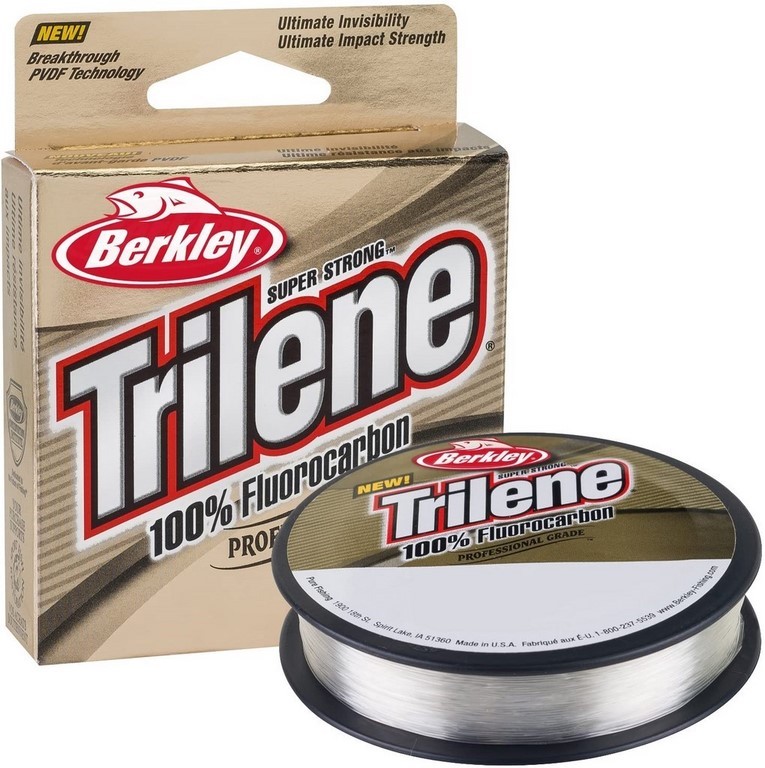
Flurorocarbon or Monofilament?
Well Done Rob on your fly fishing lesson / experience

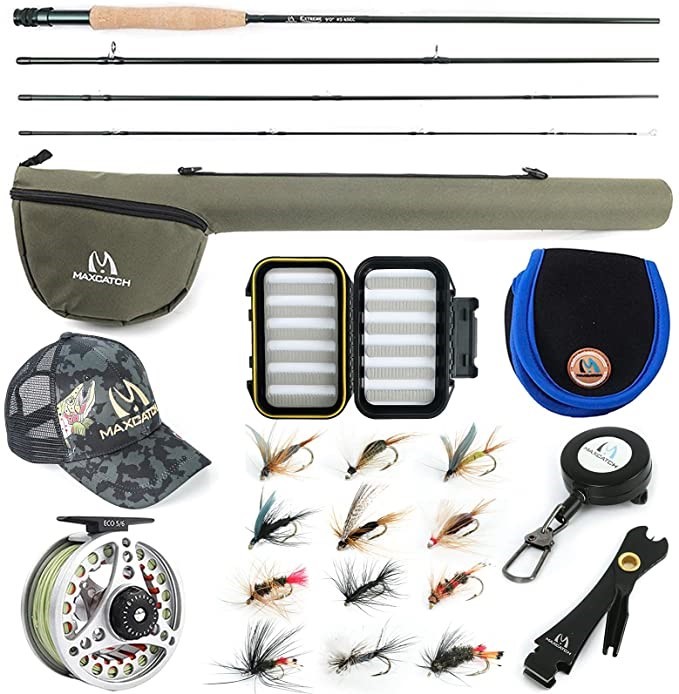
Online shop / Tackle recommendations now live
Nice one Matt, three lovely rainbows caught.

Nice one Terry, two lovely rainbows caught.

Scott catches his first Trout at 3.5lb.
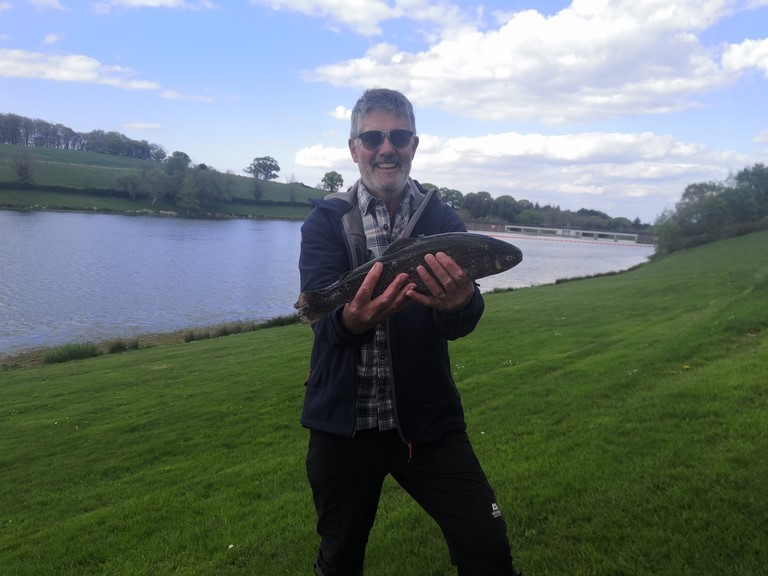
Four guys, five fish

"Booby Trap" how to fish Boobies

1. Use a variety of boobies to cover a wide range of depths.
When using a floating line and dropper flies, your point fly will go the deepest, and your dropper flies will be able to fish in the upper layers, effectively covering trout feeding at two or three distinct depths. The point fly will be used to fish near the surface, while the dropper (or droppers) will be used to fish deeper levels. You'll cover more water depths and boost your chances of finding feeding trout if you use many flies.
2. Make sure your flies are spaced evenly.
The standard is to fish one or two boobies, but you might want to try combining them with other non-buoyant flies like blobs, crunchers, or diawl bachs. Make sure they're evenly spaced, especially if they're brightly coloured. Six feet is the minimum distance, but 8-10 feet is preferable if you're using two more colourful booby fly designs, since fish may be startled if they're too close together, especially if you're retrieving quickly.
3. Recognise how retrieval speed influences movement.
The faster you pull the fly line down below the depths of the boobies, the deeper the flies will dive. The boobies will softly move towards the line's depth on a slow retrieve, while a mixed retrieve will cause them to move up and down in the water column. From a sluggish figure of eight to a roly-poly, try a variety of retrieves until you find one that works for you.
4. Use your fingers to feel for bites.
Because they're frequently fished on a sinking line, you'll be able to feel the extra weight of the sunken line during your retrieval. This can aid bite detection since, in addition to plucks, taps, and small pulls that go downwards or away from you, the line can also feel lighter. This means a fish has grabbed your booby and swum towards you, raising the submerged line.
5. Use the length of your leader to keep your flies under control.
Reduce the length of your leader or the position of your first booby if you're fishing a dropper if you want to get your flies down deeper. When using other fly lines, we all prefer to use the longest manageable leader possible, so utilising a shorter one can be a strange thought. However, some of the best results can be found close to the lake bed, so if you really want to get down deep, bring a 2-4' leader. Some fisherman will even go down two feet! Extend your leader if you wish to fish them below the surface.
6. Experiment with patterns that appear to be more natural.
While the majority of boobies are based on popular stillwater fly patterns like blobs and cat's whiskers, they don't always have to be brilliantly coloured lure patterns to be effective. Some of the most effective designs may be made to look more natural. Cruncher boobies and those that have a more nymph-like appearance are also worth a go.
Nice one Matt, two lovely rainbows caught.

Well done to my American friend, 5 fish bag limit on your first lesson.
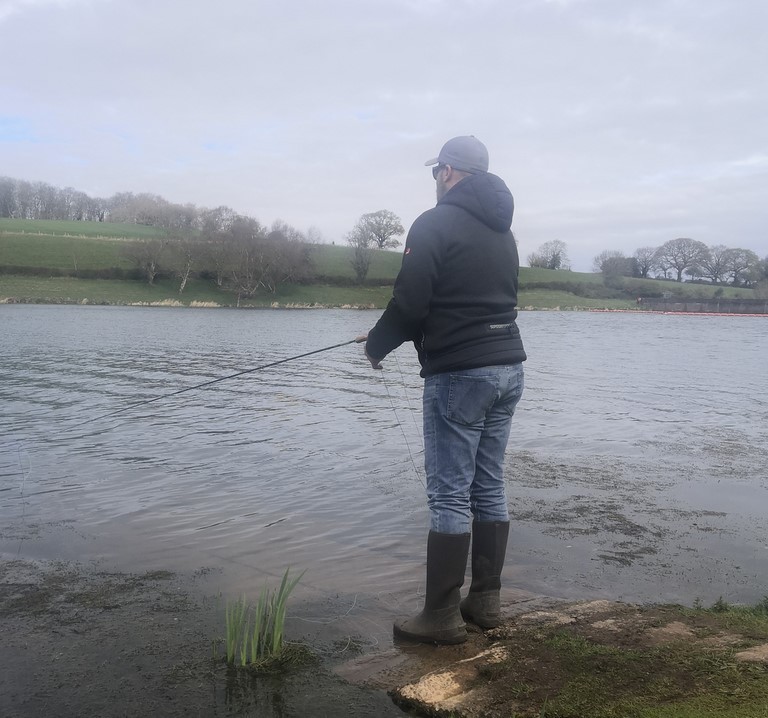
Well done Dave, three trout landed! on your first lesson.

Well done Andrew, three trout landed including a 4.5lb Beauty, lost countless more including a 10lb plus fish!
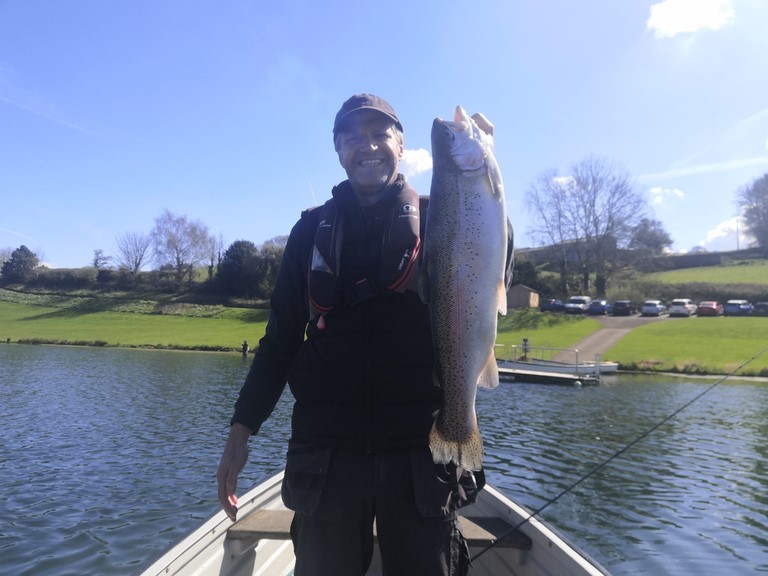
Well done John, two trout landed a 3lb Rainbow and a Tiger Trout! wow
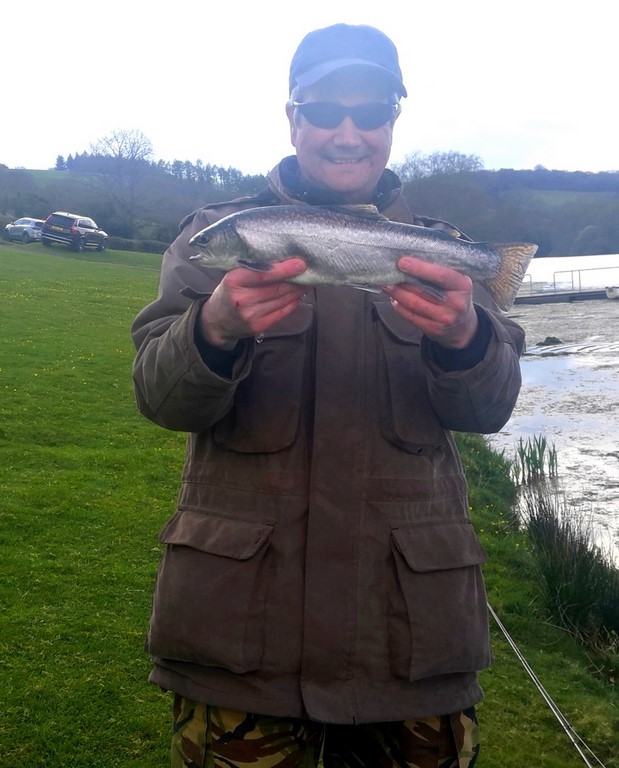
Well done Kevin, two trout landed, 3 lost

Well done Krystal, two fish and a 4lb belter!
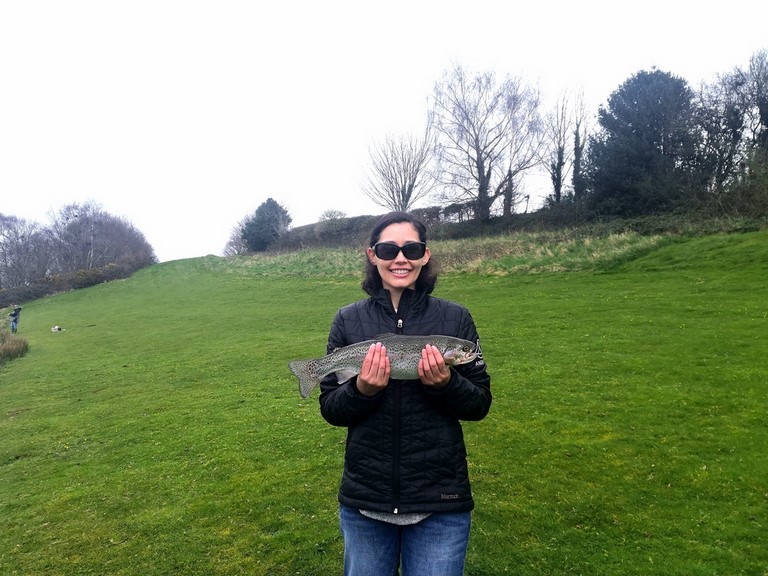
Well done Simon and Chris on your first fly fishing lesson
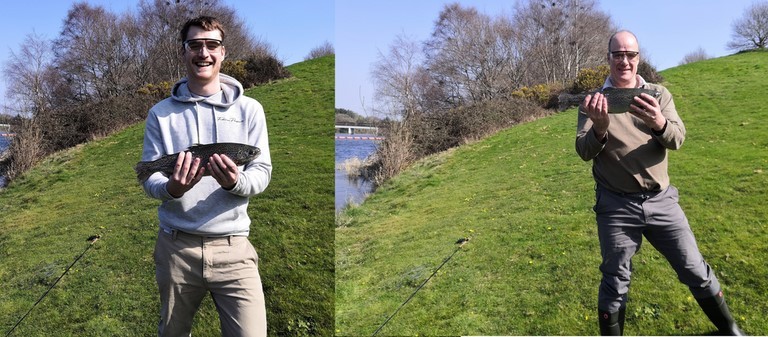
Just a quick note to thank you for a wonderful day yesterday.
Chris and I thoroughly enjoyed the whole experience. It is without doubt something that we shall be doing more of and I am particularly pleased that it is something we can and will do together.
Thanks again and all the best,
Simon"
Well done Callum on your first fly fishing lesson

Well done Alessandro! Fly fishing tuition paid off
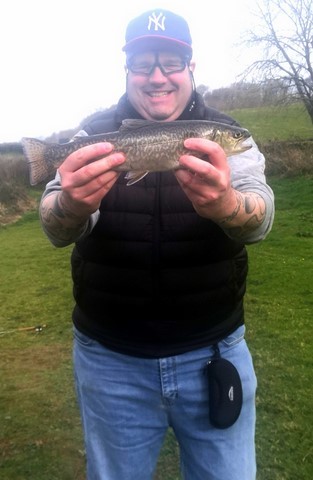
Well done Martyn! He enjoyed his fly fishing gift voucher.
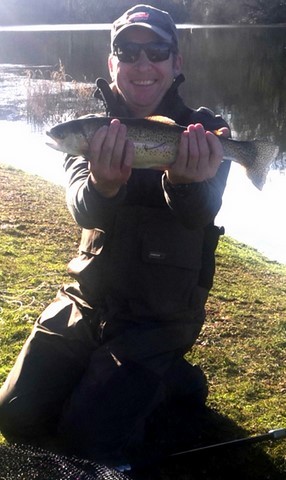
His teaching skill and knowledge was to highest standard, and he soon had me on the water casting for trout. Nothing was too much trouble and offered feedback once we were fishing alongside each other.
Towards the end of the day I even managed to hook and land the largest fish of the day all thanks to the great tuition from James.
I will be back soon !"
2022 Fly Fishing Season is nearly upon us!
Well done Richard!

Nice One Phil!

Well Played Andrew!

Well done Taff!

Well done George

George got given one of my gift vouchers for Christmas by his lovely wife. We met at 9:30 am at Hawkridge reservoir just north of Taunton in Somerset. He has always wanted to learn to fly fish and this was his big day. We went through the basic overhead cast which he picked up very quickly. I then taught him to reverse cast which is very handy in variable wing conditions.
How to fish dry flies on reservoirs

Fly fishing for trout on calm waterways with dry flies is very thrilling. Here's a quick rundown of everything you'll need to know.
When it comes to dry fly fishing for trout, how essential is presentation?
When it comes to dry fly fishing for trout, presentation and delicacy are crucial. Trout are readily startled at the best of times, but this is magnified when they're high in the water, so avoid splashy casts. For the greatest results, use longer leads, lighter line weights, and gradual tapers, as well as delicate, meticulous casting.
What is the best fly rod for dry fly fishing for trout on still waters?
On calm waters, a lighter setup, such as a 6wt or smaller, is ideal, but a 5wt or 4wt is fine and frequently preferred, especially when distance isn't a concern. It's OK to use a 9-10 foot rod with a centre to tip action. It must be supple enough to soften larger fish bites on light tippet, yet strong enough to cast a long leader and handle a larger fish.
What type of fly line should I use for dry fly fishing?
Any floating line will do as long as it floats high in the water and has a slick covering that allows you to lift off fast and throw toward rising fish.
I usually use a regular weight forward (WF) taper, but if you're going to be dry fly fishing a lot and want to invest in a more specialised line, a double taper line could be a better option. These feature a softer taper and allow for a quick and delicate presentation to rising fish without the risk of spooking them that a possibly splashier weight forward line may cause if your casting isn't up to par.
When fishing for trout with dry flies, what sort of leader should I use?
I prefer a tapered leader made of ordinary monofilament or copolymer and about approximately 10-12 feet in length. A length of tippet, normally fashioned from a lighter copolymer, is frequently added at the end of this. I usually use a 7-5lb leader with a 4-5lb tippet. Because copolymer is thin and light, and unlike most fluorocarbon, it floats on top of the water, you may want to sink it on the length closest to your fly.
Is it worthwhile to use fluorocarbon while dry fly fishing?
Yes, on occasion. If the fish are extremely wary and you're receiving refusals, switching to fluorocarbon could boost the number of takes you receive. Some individuals dislike fluorocarbon because they believe it cuts too deeply into the water on the cast and is sometimes too heavy for the flies.
Is it possible to utilise a knotted leader instead of a knotless one?
Of course, using a tapered leader isn't required, but I believe it improves presentation. They appear to make the fly changeover much more smoothly towards the conclusion of the throw, which decreases splashing.
Is it better to fish a single dry fly or several?
I usually only fish one, but it's not unusual for folks to catch two or three. If you're fishing with more than one fly, lengthen your leader by a few feet and space your additional dries on 20-25cm droppers at least four feet apart.
What is the best way to cast dry flies for trout?
If you have the ability to control the size of your loop, make it at least a metre long. When using a longer leader, a larger loop like this can assist minimise tangles, and it's likely to be necessary if you're using droppers as well.
What's the best way to keep my dry flies from sinking?
How you keep your dry fly from sinking is partially determined by the material it's composed of. There are a variety of floatants available, but some perform better with particular materials than others. A silicone gel, such as Gink, will suffice for most dry flies. Simply squeeze out a little amount and apply it onto your dry fly; it should stay afloat for several throws but will need to be replenished every now and then, and the fly may need to be replaced if you catch a fish.
A powdered floatant like Frog's Fanny will probably work better for CDC dry flies. You might also wish to invest in an amadou pad. Amadou is a fungus that has a soft, spongy texture. You may squeeze out most of the moisture from a CDC fly by pushing it against two sides of amadou. This will let the fly float again.
Why do I miss so many bites when fishing for trout with dry flies?
There are certainly several causes for this, and if I understood all of them, my catch rate would be far greater! To begin with, I believe that rising trout occasionally just miss the fly. That might be because they miscalculated its location or because they realised something wasn't quite right and turned away at the last possible moment. Some people believe that trout rise with surface insects and splash close to them, sinking the fly so that they may eat it when it sinks. I simply feel like I'm missing out on most of them because my replies are either too sluggish or too rapid. However, seeing the takes and missing them is part of what makes dry fly fishing for trout so thrilling and addicting, so missing them is part of the experience.
When fishing dry flies, when should I strike?
This is still a work in progress for me! The most crucial aspect, in my opinion, is the time. You risk ripping the fly right out of the trout's jaws if you hit too quickly. If you wait too long, it may realise that it isn't a delicious bug and spit it out. I try to lift the rod as soon as I see the rise to avoid slack line and guarantee that the fish hooks itself as it goes away. However, some of it is undoubtedly determined by how quickly they catch your fly. They'll probably require a faster attack if they come in and smash it, as opposed to those who drink the fly back slowly and have a longer chance to spit it out.
Should I cast static dry flies or pull them?
That will most likely vary depending on the day and the fly you're using. A very delicate presentation, fine tackle, and a motionless fly generally perform best in flat calm circumstances where there is little surface movement. If you try to draw a fly in these conditions, it will create a visible drag or bow wave on the water surface, which will alert most local trout that something is wrong.
However, if the water is still calm but there are a lot of flies on the surface and plenty of rises, a small pull could be all that's needed to persuade the trout to notice your fly among the others. You're unlikely to be able to make it appear like a fly skating across the top, thus in most instances, a small tweak every now and again is preferable to a long draw.
Should I make a cast to a rising trout or wait for it to find me?
Both methods work, but most fly fishermen find it difficult to resist moving their fly and casting towards a rising fish, since doing so may frequently improve your odds, as long as you don't startle them. If you're casting to rising fish, you'll generally find that a single fly, rather than a team, makes the greatest presentation. The first thing you must determine, or assume, while casting to a rising trout is the direction in which the fish is facing or swimming. A trout's range of vision is shaped like a cone that extends from the front of the skull. The trout won't see your fly if you cast outside of that area of vision.
If you aim a few feet away from the fish rather than directly on its nose, you'll have a greater chance of landing the fly in their line of sight. Simply recast as smoothly as possible, land the fly in front of the trout, and watch to see whether it rushes up to catch it.
What's the best place to go fishing?
When dry fly fishing, the natural thing to do is fish where the fish are rising the most. If you can't see any fish rising, look for them in locations where terrestrial insects are most likely to be blown onto the beach. You want to select a location where the breeze is carrying insects into the water from the shrubs and bank-side plants. The trout will frequently cluster here to await the arrival of insects on the surface.
The basics of the fly cast

The Basics of Fly Casting and Where to Begin
Fly casting has to be one of the most entertaining things to see. After you've gathered all of your essential fly fishing equipment, the following step is to master the fundamentals of fly casting. We've already gone over what fly fishing is and how it differs from spin fishing and fly fishing, but here's a refresher.
The lure's weight pulls the line from the reel in spin casting. The fly is carried to the fish by the weight of the line in fly casting. In fly casting, you must learn to cast the weight of the fly line using the fly rod. You may accomplish so fast by following five key fly casting principles:
During the throw, point the fly rod tip in the direction you want the fly line (and fly) to go.
It's not about strength when it comes to fly casting; it's about timing and technique. To become a good caster, you must practise a lot. How much practise have you had? In a month, devote at least 15 minutes every day to becoming a proficient fly caster.
Good fly casting requires a sudden stop and flick of the wrist when stopping of the fly rod. During the casting stroke, the caster puts energy into the fly rod. During the cast, the fly rod transfers energy to the fly line. For short throws, the fly caster puts a little energy into the top of the fly rod (a short, low-energy stroke); for long casts, he puts a lot of energy into the centre and bottom of the fly rod (a short, strong stroke).
In fly fishing, casting arcs (the arc made by the rod in the air during the cast) are tiny for short casts and big for long casts.
Stopping the fly rod after the casting stroke is important for generating the casting loop and allowing the fly rod to unload, allowing the line to be cast.
Beginners guide to river fishing

As an alternative to stillwater trout, more individuals are rediscovering the delights of fly fishing on rivers.
It's more difficult, you're less likely to'sack up,' and double-digit fish are almost unheard of, but the number of fishermen returning to rivers is increasing.
In today's typical reservoir fishery, the "hard-working" fisherman may catch a lot of fish by putting in a lot of effort. By "hard-working," I mean an angler who is willing to fish for hours at a time and thoroughly cover the water in quest of fish. On the rivers, however, the amount of time you spend not fishing might have a greater impact on your catch rate. Observing flows, currents, flylife, and rising fish, as well as doing all possible to ensure the fly is correctly displayed, usually leads in far more offers and hook-ups than smashing every pool you come across into a froth.
For a trout living in a river, life is a solitary existence dictated entirely by the stream. Reservoir trout, on the other hand, is more sociable and eats "on the fly," generally in the company of other trout in a plentiful region.
On all of our trout streams, from the tiniest moorland beck to the largest lowland river, there is a rigorous ‘pecking order' in place since his existence is governed by the current. The bigger and more aggressive the fish, without exception, the better the lie he will inhabit and protect against all comers. If you catch him, you can bet a fish of equal size and attitude will be in his lie the next day. The astute fisherman may take advantage of this by reading the pool before rushing in and ‘lining' it at random.
After we've established that the largest and greatest fish get the finest lies, and that this principle holds true throughout a river's trout population, all we have to do now is learn to recognise what constitutes a lie, which is easier said than done!
It's simple if the trout are rising, but for the most part, their food will be delivered sub-surface in the form of nymphs and larvae, as well as drowned terrestrial flies, insects, and caterpillars.
On moderate to big rivers, we learn via association - catching consistently at a specific location in a run, glide, or riffle - or by reading the character of the river at a specific area and fishing it accordingly. If you remember what I stated earlier about the greatest fish receiving the finest lies, this isn't nearly as tough as it appears.
Let me take you to a little brook on Dartmoor that I visited some years ago to demonstrate my argument. I stumbled into a beautiful little trout pool. A continuous trickle from the pool above fed the pool at its 'head,' producing a lovely steady 'push' down its centre. The ‘Master' of the pool - all five inches of him - lay in this, the deepest portion! Behind him, around five or six more little fish grew in size and ‘rank' as they moved further away from the pool's head. This was a typical case of ‘Mr Big' feasting first and the rest surviving on his table crumbs.
Each fish knew his place - or did until I accidentally frightened ‘Little Titch' at the tail end, who then raced up the pool, setting off a chain reaction. Mr Big, feeling intimidated by the uprising, dashed down the pool, nipped Titch's tail, and then returned to the pool's head, where the rest of the occupants, one by one, fell back into line behind him.
This month, try this wellness wake-up checklist to improve your well-being.
If we apply the same scenario to a huge river with larger trout and a much stronger current, such as the Derbyshire Derwent, I am confident that a similar pecking order will emerge.
Learning to read pools might be intimidating for a novice, but like most things in life, it isn't as tough as it looks. Individual currents, features, and signatures experienced in one pool, run, or riffle will be replicated in future pools, and lessons acquired in one pool can be applied to another.
Tackle for river fishing
Your choice of fishing equipment is quite personal, but you don't have to be as particular when it comes to choosing an outfit for river fishing. A nine-foot five-weight rod should enough in most scenarios, but an eight-foot four-weight rod will give you the edge in smaller streams or delicate presentations.
Many river purists insist on using a double taper fly line for better presentation of the fly, but I've been fishing rivers for 30 years and don't believe a double taper line would have caught me any more fish.
Fishing on the river
To retain control, keep your fly line short.
When it comes to dry fly leads, I prefer to keep things simple and fish a ‘straight-through' leader of consistent breaking strain mono whenever conditions allow. In any other than a downstream wind, this is generally sufficient because most dry fly fishing is done by throwing across or directly upstream. When confronted with the feared downstream blow, however, a tapered leader will significantly improve turnover and presentation.
On the market are several excellent knotless tapered leads, which have the advantage of seamlessly transmitting the rod's power flow from flyline to leader and all the way down to the fly.
In all except broken or choppy water, remember to degrease the forward part of any dry fly leader so it penetrates the surface film on impact. Failure to do so will frighten the target fish.
Another option is to make your own tapered leads by tying three different breaking strains of your favourite leader material together. From butt to tip, such a leader should ‘step down' in 2lb increments, with each part being of comparable length.
Assuming you require a 9-foot dry fly leader with a 3lb point, connect the 3ft point portion of 3lb line to a 3-foot length of 5lb line, and then to that, tie a 3-foot section of 7-pound line.
This is the tapered leader in its most basic form; the possibilities for varying the overall length and constituent sections are infinite, and half the fun is figuring out which combination gives the greatest presentation of the fly in a particular set of conditions.
The number of artificial dry flies accessible to anglers is almost endless, therefore I recommend doing what I do and making things as simple as possible to avoid complete confusion.
The fish in the Derbyshire Derwent aren't stupid, but they're also not picky. Spooning fish generally shows a mix of aquatic and terrestrial life that falls from the banks' deciduous trees and is enthusiastically devoured by the trout. Soldier and sailor beetles, black beetles, caterpillars, spiders, flat-winged flies, bees, wasps, and a variety of other unidentifiable terrestrial food-forms are common discoveries. What do you get when you combine the aquatic input of up-winged duns and spinners, different sedges, and chironomids? When it comes to the fly you'll use on the business end of your leader, you have a lot of creative licence.
When given the option of picking the perfect design or attaining flawless presentation, I would always go with the latter. As a result, with the Derwent, I limit myself to the following hook sizes:
Black Gnat, Grey Duster, Greenwell's Glory, Caperer, Bob's Black Beetle, F-fly, Soldier Palmer, and a variety of Mayflies (below, from left to right.)
Fishing on the river
Accessories and clothing
Nobody can enjoy a day of fishing if they are cold and wet, and when it comes to river fishing, it isn't just rain, sleet, and snow that may get you wet. If you want to do the ‘river thing' properly, especially on some of our larger rivers, you'll need to get in deep - far deeper than thigh waders would allow. Chest waders, on the other hand, are a requirement, and I have two pairs: heavy neoprene for early season and lighter weight breathables for the summer.
Deep wading in rapid currents may be perilous, so make sure you've got the appropriate soles for the task - preferably with studs, which I glue in for added durability. A wading staff is also useful for navigating the riverbed and providing extra assistance while wading.
The river is being read.
Because trout rely on the current for feeding, anglers should pay attention to the flow of every pool, riffle, and glide to find ‘fishy' spots. It's natural to expect that the majority of the food suspended in or on the water will be where the majority of the flow is, but the equation is slightly more complicated from the perspective of the trout. If he needs to work too hard to keep his ‘station' beneath the conveyor belt of delectable goodies, the energy wasted in acquiring the food starts to cancel out the calories ingested, so he's seeking for a happy medium.
Trout really make excellent use of the currents to preserve this ideal balance, and I've caught fish in the most unexpected of places. On the river, two locations in particular deserve special attention: in front of stones and the'seam' where two separate currents 'rub shoulders.' Most stones have a'stopper' wave in front of them where, like dolphins surfing a ship's bow wave, the trout may easily sit without exerting too much effort. A fish rising often in a rapid flow will likely be hovering between this and the slower water immediately to the side of the run.
For years, I ignored what have subsequently become some of my favourite Derwent runs because I thought the flows were too "boisterous" to support trout, and it was only by chance that I discovered their potential. It's also worth remembering that the quicker the current is, the harder it is for the fish to see your leader, and the less time the trout has to examine your fly and decide whether to accept it or not. Early in the season, especially during a sparse hatch, this may frequently work to the angler's favour, as fish will often choose to "use it or lose it" over the latter!
Fishing on the river
The fundamental distinction between still water and flowing water is that trout in stillwaters are continually moving. He hunts for his food on his hoof, eats it with his hoof, and swallows it with his hoof. He'll be on his way if you haven't covered him within that time.
The river trout is nourished by the current and waits in his lay, waiting for the current to physically feed him. This isn't a terrible thing for the angler because he's not going away!
This means the angler may take his time assessing the situation and planning his approach by watching the currents between him and his target. It's not just the flow of the fish on the fin that matters; it's also what happens in between that may make the difference between a good and a bad presentation. The target trout has most likely taken up residence in a flow of water that is slower than the water between you and it. Because casting directly downstream of a fish is sometimes impossible, the angler must cast upstream and across at an oblique angle, which means the flyline will be laying over water moving at various speeds.
If you cast a straight line, the current between you and the fish will cause drag practically as soon as the fly touches on the water, so the secret is to add some slack by casting a'snaky' line. You may accomplish this by wriggling the rod from side to side while shooting the line at the fish, or by checking the forward cast just as the leader rolls over in mid-air, drawing back the fly line and allowing the leader to fall on the water with some slack built in.
This is where putting forth the effort to "do your homework" will pay dividends. You have a better chance of getting it right the first time and hooking the target fish if you read the currents correctly.
Everything about dry fly fishing is extremely apparent, which is one of its most appealing features. Because it must break the surface of the water to take the naturals, the target fish gives itself away, but the method he takes a fly might vary considerably. It might be a gentle sipping rise, a traditional head and tail rise, or an aggressive cutting rise during Mayfly season.
But, regardless of the rising shape, they should all be dealt with in an identical manner: in a word, casually. When fishing the dry fly, the most common error is to strike as soon as the fly is captured, since this nearly always results in a failed connection. To avoid this, prepare yourself ahead of time and wait that fraction of a second before lifting the rod to set the hook.
Catch-and-release fishing
So you've caught your first river trout and released him. So, what are your plans for him? On our section of the Derwent, I can't recall the last time I killed a trout or grayling. Not that I have anything against anyone bringing a few fish home from wherever they chance to fish, but I have as many trout as I can handle without depleting our treasured river supplies of native brownies, and I fish the stillwaters. As a result, I always return my catch.
Whether a fish is to be killed or released, every fisherman should treat each fish captured with care and attention. Always debarb your hooks before fishing, and attempt to unhook fish without taking them out of the water. Because this is simple while you're wading, I rarely bring a landing net with me on the river.
You can typically bring a fish beside you, slip your hand down the line, grasp the hook, and simply pull it free if the hook has been debarbed. Bring the fish to hand (which should remain in the water) if the fly is deeper within the mouth, and gently support it while removing the hook with a fingertip or forceps.
Tips for Fly Fishing a Heatwave !

July, August and early September can be very tough if not near impossible to catch trout on the fly. As the water warms the Oxygen levels fall and trout hate this as they are a cold water species. They will head to deep water usually well out of reach of even the best bank caster, and literally lie low. They become lethargic, hesitant to feed, and very hard to hook. So what tips would I give if you insist in fishing in such conditions?
Tip 1 don't bother but if you are going to ignore that then read on.
If you are going to fish you want to aim for first thing in the morning, as early as the fishery allows and the earlier the better. 5:30 - 8 am will be the best time. Also last thing may be a good time 9pm onwards.
Larger lakes and rivers at altitude will be cooler and more productive.
Fishing from a boat will give you a massive advantage, find out where the deepest parts of the lake are and target those, with a fast sink line. The airation lines, also called the boils, at any reservoir will also be a great spot as the oxygen levels will be higher.
Fish your fly slow, trout will not have the energy or will to chase fast flies, and use small flies ideally nymphs.
Ignore fish that are leaping out of the water, they are not feeding but trying to get oxygen in desperation, or removing leeches as they have been sitting close to the bottom. The above is not set in stone but should act as a guide, tight lines and roll on October!!!
A family affair !
Peter arranged a days fishing with me and his two brothers, Colin and Robin, and his son Seb. Three northern Irish brothers with quick wit and humour. I had warned them that the fishing would be hard but they still wanted to come and learn how to cast the fly. They all picked the casting up very quickly again, and a quick trip to the other side of the lake due to the wind and everybody was fishing. Despite the lack of fish everybody had a good laugh and enjoyed the stunning setting. The are booking to come back in September and i am very much looking forward to it.

Well done Paul !
Paul was a complete beginner at fly fishing, and we met at Hawkridge fishery bright and early. The weather was not great for fishing, hot and sunny, little wind and an increasing water temperature. Paul picked up the fly casting very quickly and was on the water within an hour. Despite the conditions he managed to land this perfect 3lb Rainbow Trout that fought like a steam train. Well done.

Well done Joseph!
Joseph was a complete beginner really, only having done some fly fishing with his Granddad about 20 years ago. He quickly picked up the casting technique and continued to improve throughout the day. He lost 4 fish, one of which he hooked himself, before landing 2 cracking rainbow trout. Well done.

Well done Jennifer
Jennifer had done some fly fishing before in New Zealand but it was a very long time ago, so a refresher course in how to cast the fly was needed. After an hour or so she had re-learnt the basics and was starting to cast a fly again. It was not ideal conditions for fishing with bright sun and a cold easterly wind so I knew the trout would be a bit deeper, with a little help from me she landed her bag limit of 5 hard fighting Rainbows with a cracking 3lb fish.

Well done Peter
I met Peter at Hawkridge on a beautiful and warm Sunny April day, He had done some fly fishing before but needed some help and guidance with his casting. After about 30 mins ironing out where he was going wrong he was on the water fishing. His casting steadily improved throughout the day and with a little help from me he went home with 5 fish including this cracking 4lb beauty below! exceptional performance for a novice and his best ever days fly fishing.

Well done Pete
I met Pete at Hawkridge on a beautiful Sunny April day, albeit a bit cold with a Northerly wind. Pete had done no fly fishing before but I had him casting in about an hour or so. The wind was variable so after swapping banks twice we ended up where we had started. The fish were deep due to the sun and wind so a switch to a sinking line soon got results, two fish lost and then this pretty 2 1/2 pound stockie was duly landed, well done.

Well done Neil and Chris
Neil and Chris booked in for the 12th April 2021 and were complete beginners. We arranged to meet at Hawkridge Trout fishery. The guys picked up the basic casting quick enough and due to the wind direction we took a walk over the dam to the other side of the lake. Bathed in lovely April sun but with a cold northerly wind the fish were not that interested, so after a couple of hours and with the wind more favourable he headed back to our original site, this turned out to be a good move, over the course of little more than two hours the guys had landed four fish to 3lb, two nice brace shown below. Well done!

Well done Emlyn
Emlyn was a complete beginner, but soon picked up the basic fly casting, with some fine tuning he improved throughout the day. He managed to play and bring to the net this nice 2 1/2lb Rainbow trout!

Well done Dave
Dave was a novice fly fisherman who was struggling with some areas of casting and fly fishing in general. I took the time to learn what these issues were prior to us meeting. His casting was already pretty good but with some pointers it improved instantly giving him an extra 5 to 10 yards distance. Other areas such as fly selection and leaders also helped him understand more about the sport. He landed two perfect Rainbow trout at Hawkridge and missed / lost about 5 more. He was kind enough to leave me the following review :
Positive: Professionalism, Quality, Responsiveness, Value
Had a lesson with James on 8th April at Hawkridge Reservoir Somerset. Not one of his younger students as I won’t see 60 again and prior to the day with James I was able to cast a fly so not a complete novice.
Great day and I can not recommend his patient instructional style enough. Taught me how to single and double haul cast. I had a list of queries regarding what I was doing wrong and problems I had when fly fishing and James took the time to address each of them, regardless if it was about tackle, reels, lines, leaders or flies.
To round the day off caught two good fish as well as losing several others.
Hope to fish with you again when we catch up James.
Thanks for the great day

Looking forward to 2021 season
To say 2020 was a tough year for many is an under statement! hopefully the end is in sight and we can all get back to some form of normality. I am very much looking forward to the new fishing season and meeting some lovely guests again. Tight line everybody. April is now pretty much booked up, and I will report back here on how the first few days of the new season have gone.

Why is fishing so hard in the summer?
Rainbow trout originate from Northern America and the Kola region of Russia, they are naturally cold water fish preferring a water temperate under 16 degrees C. Anything over this and oxygen levels start to drop and the fish become stressed, loosing condition. In the warmest summer months of late June to early September the water temperature can easily exceed 20 degrees, in deeper lakes this is not so much of a problem, as the fish will simply sit on the bottom. On smaller stillwaters the fish literally have to fight just to survive.
Catching them is very difficult if indeed even possible. First thing in the morning and last thing in the evening are the best times. That said when the water temperatures drop fishing can be excellent. The best months for fly fishing are October through to May.

Well done Shaun on your first Elinor Rainbow.
Shauns wife had brought him a fly fishing gift voucher for his Birthday, and we duly met At Elinor trout fishery on a very windy and overcast day. Sean had fished before but needed his casting technique improved which we duly got to work on. Conditions were challenging with a strong southerly wind touching 35 mph at times. However his casting improved quickly and he landed two trout in total. A good result given many experienced anglers blanked on the day. He sent me this nice email afterwards.
" Morning James,
Thank you for a great day, was very enjoyable and the trout was delicious, happy wifey!
Feel a lot more confident with my casting.
Have a good day.
Shaun"

Well done Scott and Brendan
I decided to have a day out fishing with an ex customer now friend and his mate Brendan. We arrived at summerfields just before 9am and tackled up. Weather conditions were perfect, overcast, cool and a light wind. We were catching hard fighting rainbows straight from the first cast, in all we took home 4 fish each around the 3lb mark, and returned about 20 each. We caught on everything, dry flies, buzzers and nymphs.

Well done Warren on your first Trout
I met warren at 10am at Summerfields on a bright and hot day, we moved down to the end of the lake and he picked the basic casting up very quickly. I had him fishing quickly as I knew the hotter the day got the harder the fishing would be. He made 10 casts and then BANG he hooked his first hard fighting Rainbow Trout just under 3lbs. He played it well and it was duly netted! He hooked and lost a few more on what was a tough day. I think he may be hooked.

Summerfields Trout Fishery
Summerfields trout fishery is under new ownership, I have been speaking to the new owners, Sean and James, and it looks like they are putting in some really hard work to make this fishery great again.
They have an open weekend 6th and 7th June 2020 so why not pop along and enjoy some great sport. If we don't support small fisheries like this we will simply loose them and it will be another trout fishery turned into coarse. Summerfields is top of my list for teaching beginners to fly fish, because its easily accessible, the banks are easy to cast from not many trees to get snagged on, and its well stocked with hard fighting Browns and Rainbows. I will be visiting soon and doing a full review.

Well Done Jeremy On Your 3lb Rainbow And A Second!
A cracking day out with Jeremy on his first ever fly fishing lesson, he picked the basic casting up fairly quickly and once he started fishing had a take in about 5 minutes but missed the fish.
Not to worry his patience was rewarded by this cracking 3lb Rainbow trout followed by a stockie shortly after.
Well done!
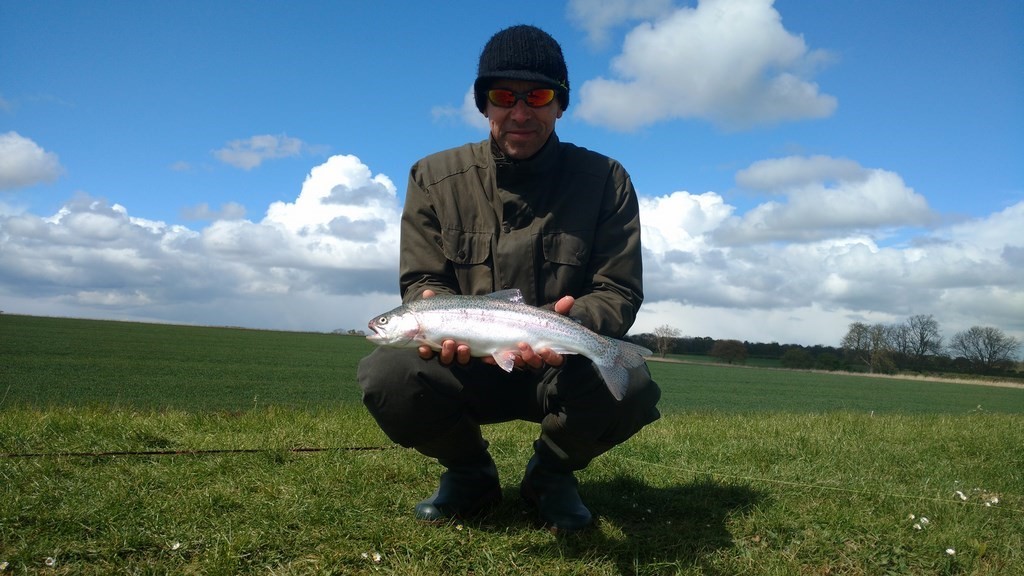
Well Done Ben & Ian For 3 Fish Each Including An 8Lb Rainbow

Ben and Ian booked two days out with me on a Friday and Saturday. The fishing on Friday was hard from the bank, with many people struggling although we did manage to hook a couple of trout. A change of tactics was needed for Saturday so I booked a couple of boats.
I met the guys at 9 am and conditions were grim, a strong northerly wind that was freezing and bright sun, but we got started. After an hour or so the fish began to feed and both guys hooked and landed 3 fish each, loosing a few more. The last fish of the day caught by Ben was a cracking 8lb monster, that he played really well. Great day guys!
Well Done Brian On Catching A Cracking Brace Of Trout.

Brian is a Carp fisherman who's lovely wife bought him one of my fly fishing gift vouchers for Christmas, Lucky man! We agreed to meet at 9 am at Summerfields but Brian arrived at 8 am (keen or what)
We got to grips with the fly casting and within an hour I tied on a blue flash Damsel and he started to fish for real.
As I was busy looking through the fly box for the next fly to use I heard a shout and looked over to see Brian's rod bent. He landed a nice stockie of about 1lb 10oz, followed later in the day by a cracking 3lb trout! Well done.
Well Done Tom On Hooking, Playing And Landing Your First Trout.

Tom and I met on a windy Saturday morning and conditions were far from ideal. He got to grips very quickly with the basic overhead cast so I got him fishing within an hour. As his casting steadily improved I grabbed my own rod and fished next to him, in no time I was into a fish and passed Tom the rod. He played the fish well and when we netted it we were both impressed to see a lovely 4lb Rainbow Trout! the biggest from the fishery that week!
I duly hooked another 2lb trout which Tom landed, and then the pinnacle of the day, watching toms line he had just cast I noticed a twitch. "that's a fish I screamed" he struck and landed another 2lb beauty. Well done!
I Have Been Appointed Tackle Tester For Fishing Republic Plc And Yorkshire Game Angling

I have been asked to test fly tackle on behalf of Fishing Republic and Yorkshire Game Angling. Over the next few months I will be posting my tackle reviews on this blog, and they will also appear on the Facebook pages of the tackle suppliers.
I hope to be testing everything from fly lines, rods, reels and flies.
Well Done Chris, 3 Fish On Your First Lesson!

Chris was booked in at 9 am with me and we duly met and had a quick chat about the day ahead. The weather was dry but very windy not ideal for a first fly fishing lesson. However he picked up the basics of casting very quickly and after changing position to a more sheltered bay I felt it was time he started to fish for real. I tied on a short leader with a cats whisker and he was casting a respectable 10 - 12 yards. In only about 20 mins I noticed a pull on the line and before I could shout strike he had already done it!. Playing the fish well it was duly landed.
Two more fish followed on what was to be fair a hard day for fishing! well done. He also sent me this lovely email that night.
Hi James,
Just a quick email to say many many thanks for the tuition today at Summerfields. It was an excellent day and I got a lot out of it. Really enjoyed the sport and am definitely going to look at getting some of my own equipment and getting back there as soon as I can to keep the practice fresh in my head and because I enjoyed it so much.
The tuition itself was excellent from yourself and catching those 3 fish on my own, so to speak, was a massive buzz.
Just for one final time, I should of written it down lol, can you remind me what pattern of fly we used today? I know you mentioned other popular patterns, like Damsels, daddies, buzzers and montanas, all of which I am going to remember.
Thanks again James, learned loads and had an awesome day. Looking forward to continuing with fly fishing
Regards
Chris
Well Done Tim On Landing Your First Trout!

Alan and Tim booked a fly fishing lesson on Saturday and we all met at Summerfields at 9:30am. After running through how trout feed and how we catch them we quickly moved on to the basics of fly casting. The two boys picked up the basic roll cast and overhead cast in no time and we were fishing by lunchtime. Conditions were not great, in fact it was windy and bloody freezing with most other fisherman heading for home by 3 pm. Not us though and we had the place to ourselves by mid afternoon.
A quick change of location (heading up to the point) saw plenty of fish moving. Culminating in Tim landing his first Rainbow of about 2 lbs. Well done.
Pochard Trout Fishery Review

So on Tuesday I met a former customer / pupil at Pochard Trout Fishery, he is a member and had decided to take me fishing as a thank you. Pochard is a small lake no more than two acres, set in a tree lined valley and stocked with Rainbows and Browns. The most notable feature is the brand new lodge, built out of stone and boasting a weighing room, small tackle area, toilets and a restaurant and bar. The finishing is excellent, solid oak tables and a huge hard wood veranda built out over the lake.
We met the bailiff Ray, who discussed tactics and flies with us and off we set, to the dam end which is the deepest and widest point on the lake. With few fish showing and none taking we decided to move up yo the shallow narrow part of the lake as we had seen plenty of trout cruising as we walked to the lodge. The fishery boasts lots of purpose built platforms and whilst some casting can be tricky its pretty accessible. I would not however recommend it for complete beginners as the casting can be challenging in some areas.
After about 20 minutes my fishing partner Scott was into a nice rainbow of about 2lb caught on a cats whisker. Three more Trout quickly followed between us and one perch, so we decided to break for a liquid lunch in the lodge. Very reasonable drinks prices and a good friendly atmosphere.
The afternoon was a bit quieter with only a few pulls, the trout were not really interested, but it was a lovely few hours fishing.
Well Done Scott On Landing Three Rainbows

This was Scott's second fly fishing lesson with me but his first going after Trout, as the previous one was for Pike.
We set off at 7:30am for Draycote Water, got tackled off and jumped in the boat. Conditions were not ideal a strong easterly wind and no fish moving. However after just 10 minutes I was into a Trout and passed the rod to Scott, who promptly lost the fish!. Never Mind, only 30 mins later I heard him shout "fish on" and looked to see his rod bent double.
He played it well and after a 4 minute battle the fish was netted. Two more Trout followed as well as another lost fish and a few missed pulls. Well done mate!
A Cracking Day At Draycote Water

So I decided to have some "me time" last week and headed of to Draycote Water near Rugby for a days boat fishing. Conditions were ok, very windy and sunny, but my heart sank a bit when the fishery bailiff told me it was fishing hard with a rod average of only 2 fish.! After getting my ticket and finding my boat I headed up to the north dam to try my luck. Looking at the other boats I could not see any bass bags hanging over the side of their boats, meaning nobody was catching yet. After about 50 minutes and not a single take, I upped anchor and took a slow float down past the dam to see if I could see any fish moving. I spotted some trout feeding on the surface so dropped anchor and began to fish, a nice dry sedge pattern but not a single take.
I then noticed a fish rising just in front of the boat, it was going after a discarded cigarette butt! this is not that unusual as they look like trout pellets. Orange I thought, that's the colour they want, so tying on a little orange hopper I hooked this cracking 4lb rainbow on the second cast. Three more followed fairly quickly and it was grand to be afloat.
Tips For Beginners To Improve Your Casting And Catching

Anyone with some tuition, perseverance and dedication can become an average fly fisherman, but if you want to catch more than the fisherman next door you need an edge. So what separates the average angler from the guy or girl who seems to catch more fish? Preparation and an eye for detail That's what.
Look after those fly lines: So many people buy a fly line, attach it to the reel and fish for years with it, with ever decreasing casting distance. A fly line is like a finely tuned engine and needs looking after. It should be cleaned after every forth or fifth visit to the fishery in a mild soapy solution (strip all the line off onto your lawn, and using a clean cloth dipped in the solution run it over the entire lime) Then use a fly dressing to lubricate the line. This will get you a few extra yards on each cast and ultimately a few extra fish. I even clean every ring / eye of my rod and wipe them through with a silicone wipe (used for cleaning car dashboards) a few extra feet can make all the difference.
Check for wind knots regularly : Wind knots happen to every fly fisherman, when the leader loops over itself on the cast. They are hard to see, the best way to detect them is to run your fingers over the leader from braided loop to fly and you will feel them. SO WHAT? Well a wind knot can reduce the breaking stain of the leader by 50% making a 6lb breaking strain leader into a 3lb and loosing a fish.
The leader gets shorter: As a rule our fly leader is the length of the rod, say 10 feet. Every time we change a fly we loose about 6 inches of leader, change a fly a few times and we have reduced its length by a few feet. Always take time to tie on a new leader, 2 minutes doing this can be the difference between catching and not.
De-grease the leader: The leader will tend to float and make a wake and this can put Trout of taking, especially when the water is flat calm. It is therefore a great idea to de-grease the leader, but don't go buying expensive leader de-greaser the best thing to use is washing up liquid! and it works out a lot cheaper. Have some with you in a small bottle, put a little between your fingers and run the leader through from braided loop up to the fly.
A Great Recipe For Fly Caught Trout

Here is a great recipe for your Trout, Trout with watercress sauce.
Ingredients
A 2lb – 3lb Trout, preferably caught by you!
500ml of Creme Fraiche
A teaspoon of Capers.
Zest of 1 lemon plus juice
Big bunch of watercress
Salt and pepper.
Oven cook the trout (season with some salt on pepper inside the body and slash the skin 3 times on each side to prevent curling) at about 180c for 22 mins or until cooked. Alternatively fillet the fish and pan fry skin side down for about 7 – 9 mins.
In the meantime make your easy sauce.
In a bowl combine all the ingredients, use a blender to pulse into a smooth sauce, season to taste. Serve with new potatoes tossed in butter, Asparagus (grilled or boiled) or Samphire pan fried in a little butter for 2 mins)
Easy but really delicious.!
How To Clean (Gut) A Trout

If your planning to freeze your Trout its better to freeze it with the guts in. This stops it drying out in the freezer. However the fish must be fresh, so if its been sitting on the bank all day in 33 c heat before you freeze it, you may wish to re-consider. We keep out catch fresh by using a bass bag, this is a cloth bag that you can hang over the side of the boat or in the bank shallows.
Gutting a fish is a lot easier than you think and its not stinky or stomach churning.
Right to gut or clean your fish. You will need, a very sharp knife, some newspaper, a teaspoon and an empty sink.
Take your knife and make a cut the length of the trout's body (underneath) from just below the head to just before the tail.
Pull out the guts by hand, they should come out fairly easily and in one.
Running along the spine you will see a black colour, this is just coagulated blood, run a knife the length of it and then using the teaspoon, scrape it out.
Run the fish under a tap using your hand to clean the cavity.
Its up to you whether you lop the head and tail off
A Memorable Summer Thanks To Mick
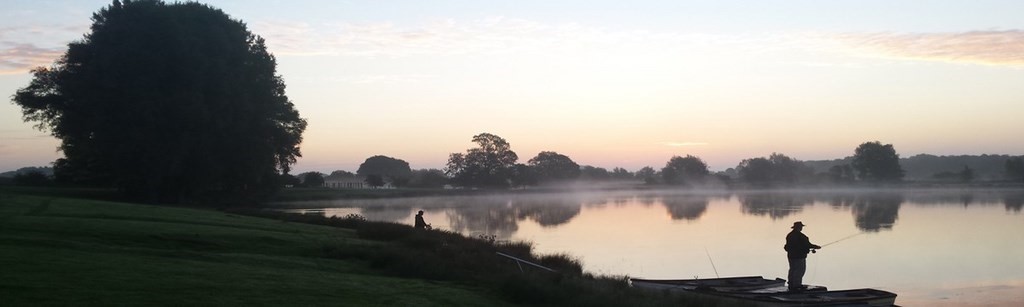
As mentioned in the about me page, I started fly fishing in the highlands of Scotland for wild brown trout, even though I was lucky enough to be able to go north 3 times a year I still missed fishing when I was back in Northamptonshire. I had no idea at that time that there were local stillwaters stocked with Rainbow trout very near to where I lived. I stumbled upon this revelation when I picked up a leaflet in my local tackle shop for Elinor trout fishery, which was only 10 miles away.
At this point I was still not a very good fly fisherman, I had nobody to teach me and struggled along. I asked my mum to drop me at Elinor for a days fishing and was so excited. I remember having the place to myself for most of the day. I could see trout rising and jumping but I could not hook one. My leader was getting shorter and shorter as I tried new flies (I had no idea that the leader should be changed regularly to make sure it was always about 10 feet long)
As mid to late afternoon came more fisherman arrived, they were all catching and I wasn't, it was very frustrating. Then the moment that changed my fishing forever happened, the Bailiff Mick, came down to see how I was getting on, he was surprised I had not caught any fish until he saw my leader and set up. Now Mick was a real character, he could easily be mistaken for a grumpy, angry bloke, but actually he was a nice guy and one of the best fisherman I have ever met. He snatched the rod from me, tied on a new leader, put on a muddler minnow and in three casts he hooked a trout!. Wow, my rod and line had actually hooked a decent fish albeit with me not at the end of it, but I saw it could be done. At least I went home with a fish and in those 5 minutes spent with Mick I had probably learnt more than I had in many years.
The following week I went back to Elinor, I fished all day without a take, then towards the end of the day, it happened, a fish took my fly. I will never forget that feeling. The fish was only on for about 1 minute and I lost it. It was a mix of excitement and disappointment. I had actually hooked a fish but lost it. I told my mum about it and no doubt she felt for me. Oh well I thought maybe I will get back to Elinor in 2 weeks or so as I went to bed.
The next morning my mum burst into my bedroom and said “if you get up now your dad says he will drop you at Elinor on his way to the office” I was up like a shot, she packed me a lunch and I was duly dropped at the fishery. I had a new confidence I knew I could do it as I started to fish. Within 20 minutes of fishing I hooked and landed my first decent fish, then another and then another. By lunchtime I had three fish on the bank and lost a beauty in the afternoon ( I did not know how to play a decent fish and it snapped me up) After that day I never looked back, and spent many happy years fishing what is still today my favourite stillwater. Thanks Mick!